



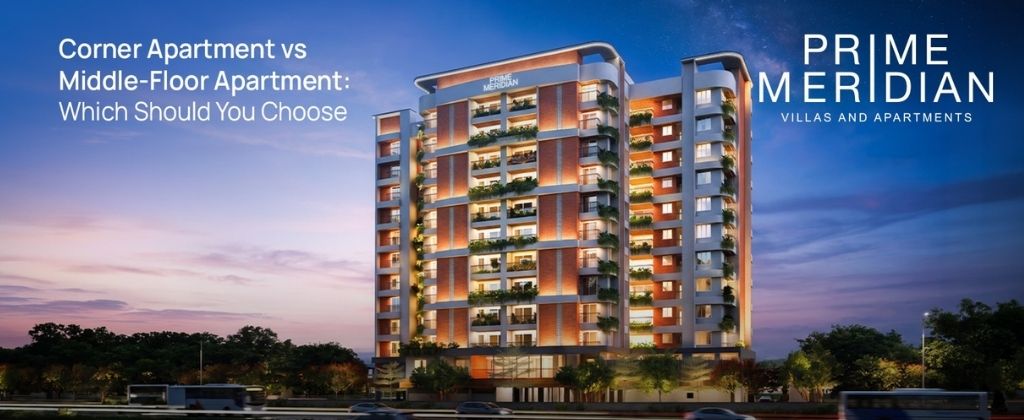
Two apartments in the same building can feel very different simply because of where they sit on the floor. A corner apartment usually has fewer shared walls and more sides facing the outside, while a middle apartment usually has neighbouring homes on either side.
This can affect natural light, ventilation, privacy, heat, and views. The position can also affect the price, making the corner apartment vs middle floor apartment comparison worth considering before you buy.
Corner Apartment vs Middle Apartment: What’s the Difference?
A corner apartment sits at the end of a floor, with more than one side facing the outside. This often means fewer shared walls and more windows.
A middle apartment sits between other homes on the same floor, with neighbouring apartments on either side. These apartments usually have fewer external walls and windows.
Advantages of a Corner Apartment
Corner apartments have more than one side facing the outside of the building. This can bring more natural light and airflow into the home. It can also allow for more windows. The exact advantages depend on the apartment’s layout and orientation.
Better Natural Light and Cross Ventilation
With more external walls, corner apartments often have windows on more than one side. This brings more natural light into the home and allows air to move through different rooms.
More Privacy and Fewer Shared Walls
Corner apartments usually share fewer walls with neighbouring homes. This can reduce noise from adjacent apartments and give residents more privacy.
More Flexible Layouts
A corner position gives more flexibility when planning the layout of an apartment. Depending on the design, this could mean additional windows, different room placements, or a layout that differs from other homes on the same floor.
Better Views and Extra Space
A corner apartment can offer views from more than one side, depending on its position and surroundings. Some corner units also have larger balconies or additional outdoor space, although this varies from one project to another.
Disadvantages of a Corner Apartment
A corner apartment offers more exposure to the outside, but this can also have a few drawbacks. More sunlight, a higher price, and exposure to outside noise are some of the factors to consider before choosing one.
Higher Heat Exposure
More windows and external walls can mean greater exposure to direct sunlight. This can make the apartment warmer during the day and increase the need for air conditioning, depending on its orientation and window placement.
Higher Purchase Price
Corner apartments are often priced higher than similar middle units. The difference usually depends on factors such as the floor, views, layout, and outdoor space.
Potential for More External Noise
A corner apartment facing a busy road can be more exposed to traffic noise. Check the apartment’s surroundings and the direction it faces before making your decision.
Advantages of a Middle-Floor Apartment
Middle-floor apartments have homes on either side, which gives them less exposure to the outside. This can mean less direct heat, a more enclosed feel, and less exposure to outside noise.
Less Heat Exposure
With apartments on either side, middle units have less exposure to direct sunlight through external walls. This can help keep the home cooler and reduce the need for air conditioning.
Lower Purchase Price
Middle-floor apartments are often priced lower than corner units in the same project. The actual difference depends on factors such as the floor, size, views, and layout.
Quieter, More Enclosed Feel
Having neighbouring homes on either side can make a middle apartment feel more enclosed. It can also reduce exposure to outside noise.
Corner vs Middle Apartment: Price and Resale Value Comparison
When comparing a corner unit vs middle unit, price is often one of the first things buyers consider. A corner apartment often costs more than a comparable middle apartment. Whether the difference is worth paying depends on the features you actually get and how much buyers value them later.
| Factor | Corner Apartment | Middle Apartment |
| Purchase Price | Usually higher | Usually lower |
| Price Difference | Depends on the project and unit | Lower starting price |
| Resale Value | Demand depends on price, views, and layout | Demand depends on price, layout, and location |
Vastu Considerations for Corner and Middle Apartments
For buyers who follow Vastu, the position of an apartment is only one part of the decision. The direction of the main entrance, the placement of the kitchen and bedrooms, and the overall layout are also considered when choosing a home.
A corner apartment is not automatically better than a middle apartment from a Vastu perspective. Both can suit different Vastu preferences depending on their orientation and floor plan. If Vastu is important to you, check the individual apartment layout rather than choosing a unit based only on whether it is a corner or middle apartment.
Which One Should You Choose?
If you’re deciding which apartment position to buy, the better choice depends on what matters most to you. A corner apartment might be worth paying more for if you value natural light, ventilation, privacy, or views. A middle apartment could make more sense if keeping the purchase price lower and limiting heat exposure are higher priorities.
Before deciding, compare the actual apartments rather than their position alone. Look at the orientation, layout, views, noise, ventilation, and price difference between the two units.
| If you value… | Consider |
| Natural light and ventilation | Corner apartment |
| Privacy and fewer shared walls | Corner apartment |
| Wider views | Corner apartment |
| Lower purchase price | Middle apartment |
| Less heat exposure | Middle apartment |
| A more enclosed feel | Middle apartment |
Conclusion
Choosing between a corner and middle apartment comes down to what matters most to you. A corner apartment could be worth the extra cost if you value natural light, ventilation, privacy, or views. A middle apartment could be a better fit if price and lower heat exposure are more important.
Before you decide, compare the actual apartments, not just their position. Look at the layout, orientation, views, noise, and price to find the one that suits you best.